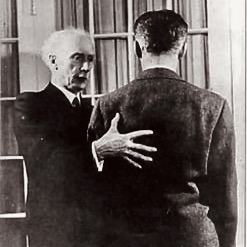
The quality of the touch will depend on the absolute priority for us to maintain a good use of ourselves" – Elizabeth Langford
Aefmat advises anyone wishing to begin training to take around thirty hours of individual lessons to gain some experience before applying to train. Aefmat currently recognises the "BodySoul" school as the Belgain-based training school for future Alexander Technique teachers.
The training consists of 1600 hours of group lessons over a minimum of 3 years, 4 mornings a week. The next course will open in January 2026. Registrations are now open. For further information, please contact Michèle Desonai + 32 486 17 63 04 - midesonai@gmail.com
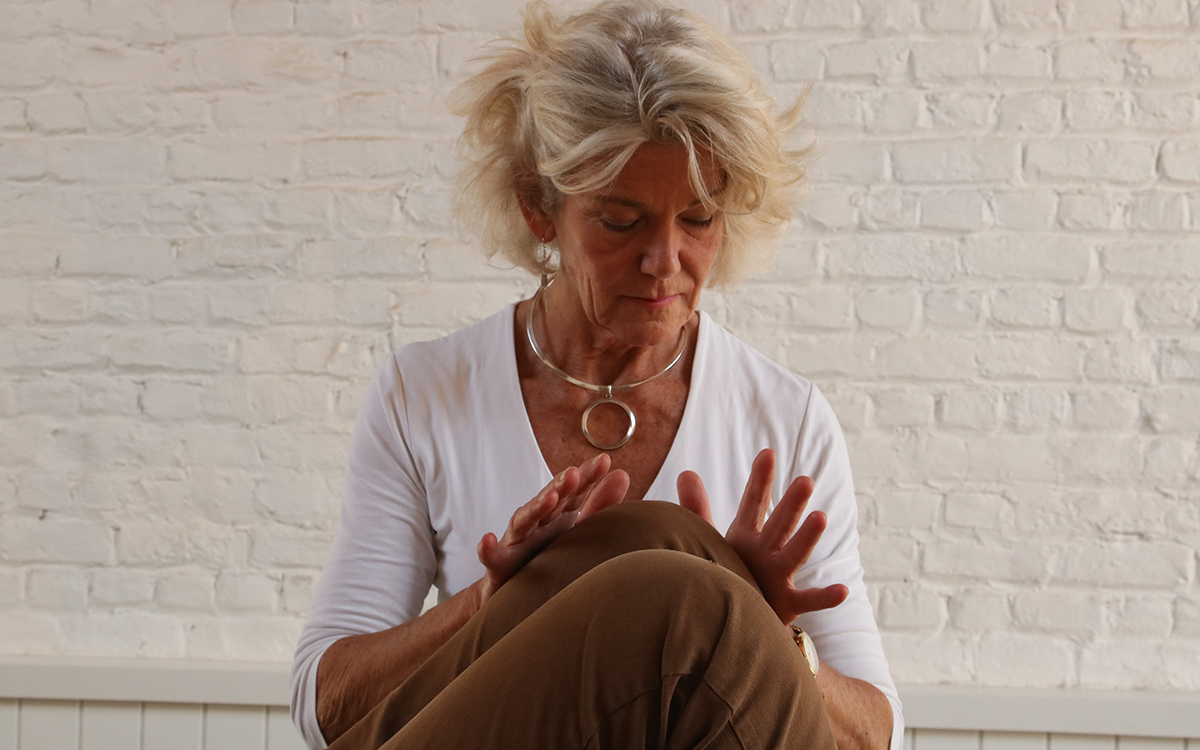
Why and how Michèle Desonai started to train F.M. Alexander Technique teachers at the BodySoul school.
After many years of practising psychotherapy on the one hand, and teaching the F.M. Alexander Technique on the other, training teachers of the Technique seemed to me a unique opportunity to bring together two approaches, teaching and caring. The aim of the teaching is to awaken the ability to care for oneself as a whole, body, mind and soul.
This teaching is far removed from any form of “classical” learning. Here, students learn to free themselves from their ‘chains’ :habits and acquired forms that most often lead to symptoms and complaints, and prevent them from fully enjoying life within themselves, from making their own choices and from opening up to others.
Training people who want to teach this “Technique” was and remains a challenge that I wanted to take up. In 2016, at her request, I took over from Monique Vanormelingen, who was running the school as a continuation of the work begun by Elizabeth Langford in Belgium in 1980. Claire Destrée, who had already been assistant before, and Sarah Ludi joined me in this challenge.
The aim is to instil in each future teacher an awareness of self based on the way in which they use themselves as an indissociable whole, body and mind. Talking about the use of oneself is not a behavioural perspective, but an awakening to oneself in an evolutionary and preventive perspective. So it's never a question of a form, nor a posture to be acquired, but of a presence to oneself in the ever-changing relationship with the environment.
Pupils learn to develop two inner guides that are the foundations of their use: the guide of non- doing: stopping, or stopping doing something that has become a habit totally outside our field of consciousness, ‘inhibition’. The guide of orientation: in contact with the soil, in the field of gravity that conditions us, giving ourselves the directions that respect both our structures and how they work, in fact, thinking ourselves.
Training is about learning these guides for oneself. Learning to know oneself, to be aware of one's own use, without judgement, is the condition on which an encounter with the student will be possible and transformative. In the course of their training, future teachers must go through this process intensively, before they can teach themselves.
The Belgian training school was founded by Elizabeth Langford.
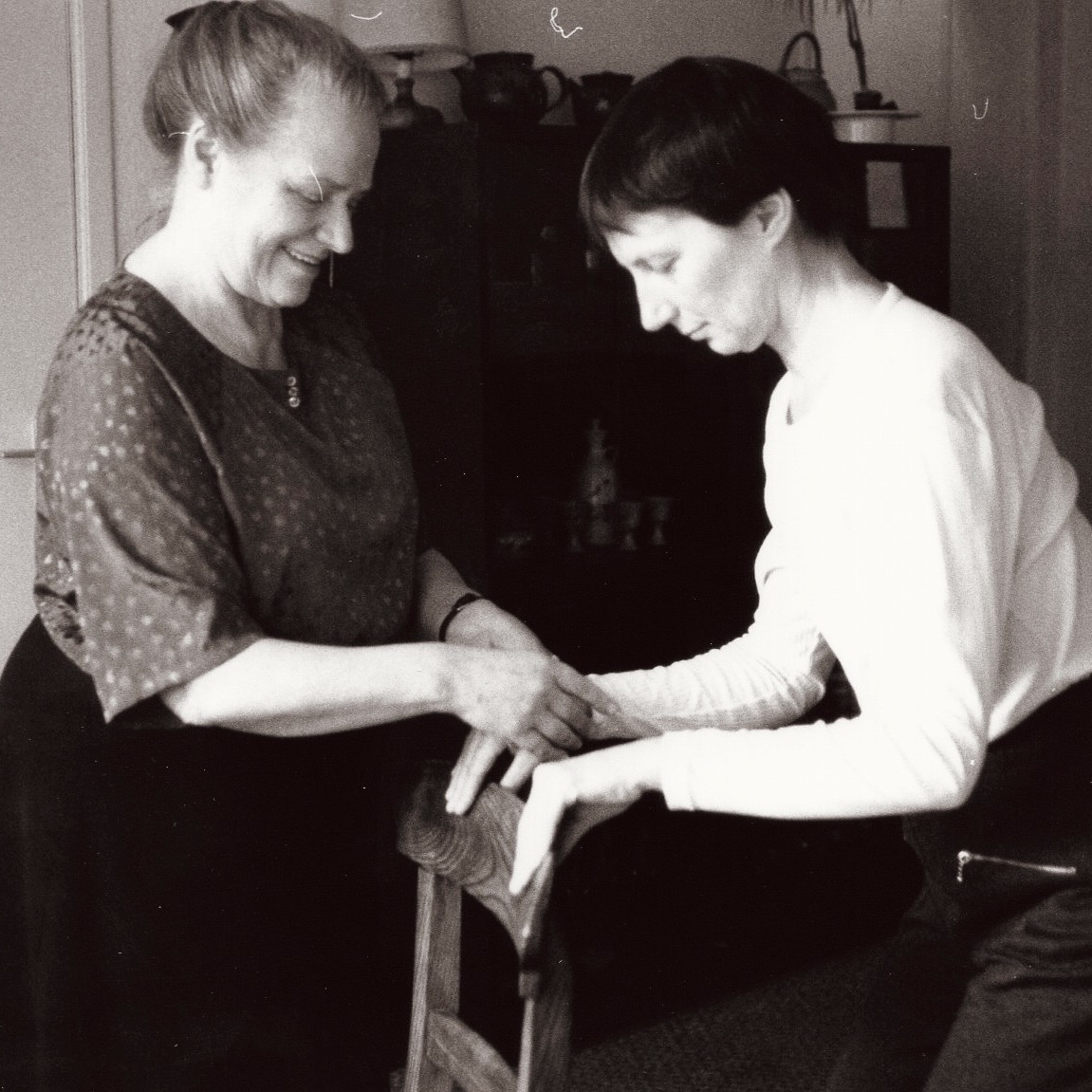
English violinist Elizabeth Langford trained to teach the Alexander Technique at the Constructive Teaching Centre, the school run by Walter and Dilys Carrington in London. After teaching in London for several years, she opened a training school in Somerset with Paul Collins. Several Belgian teachers were trained there. She then moved to Belgium (Lasne) in the early 1980s and began training future teachers.
She then surrounded herself with assistants—first Eliane Lefèvre, who contributed greatly to training a small group of students, then Michele Desonai, followed by Claire Destrée, and finally Monique Vanormelingen, who took over the direction of the school after E. Langford's death. A few years later, M. Vanormelingen decided to retire, and since then Michèle Desonai has been in charge of the training school with Claire Destrée and Sarah Ludi as assistants, as well as, over the years, Katri-Mari Ruonala, Malcolm King, and Philippe Beumier.
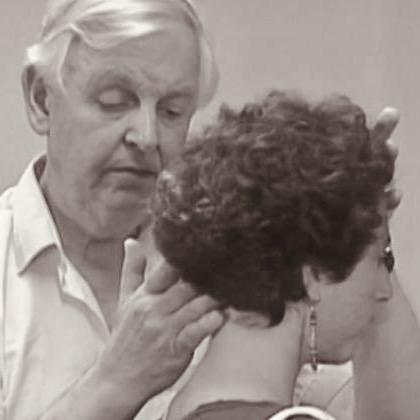
Three intense years immersed in the Alexander Technique, where we learn and continually relearn to stop and find the calm so necessary for freedom of choice in our movements and thoughts. What a saving grace in our busy lives, which often rush by at a speed that surprises us. During my training, I learned to embrace and master slowness, to be present in the moment and to rediscover a more unified body and mind, gradually relieved of my daily pains and worries, equipped to live differently, in a more authentic way. Once you have experienced the Technique, it is difficult to part with it. It has become intertwined with my life. I would not want to move forward without it, my faithful and precious travel companion." - Clarisse Tribolet